

Part three of a five-part article about Robert E. Howard and the Spicy stories. Rescued from the late Two-Gun Raconteur blog created by Damon C. Sasser.
Search Results for: Lost

16
Feb
Feb
Kirby O’Donnell is a fictional character created by American author Robert E. Howard. He is an American treasure hunter who operates in early-twentieth century Afghanistan disguised as a Kurdish merchant named “Ali el Ghazi.” O’Donnell appears in three stories written by Howard, two of which were published during his lifetime. The stories featuring Kirby O’Donnell are noted for their blend of historical adventure, action, and intrigue.
04
Jan
Jan
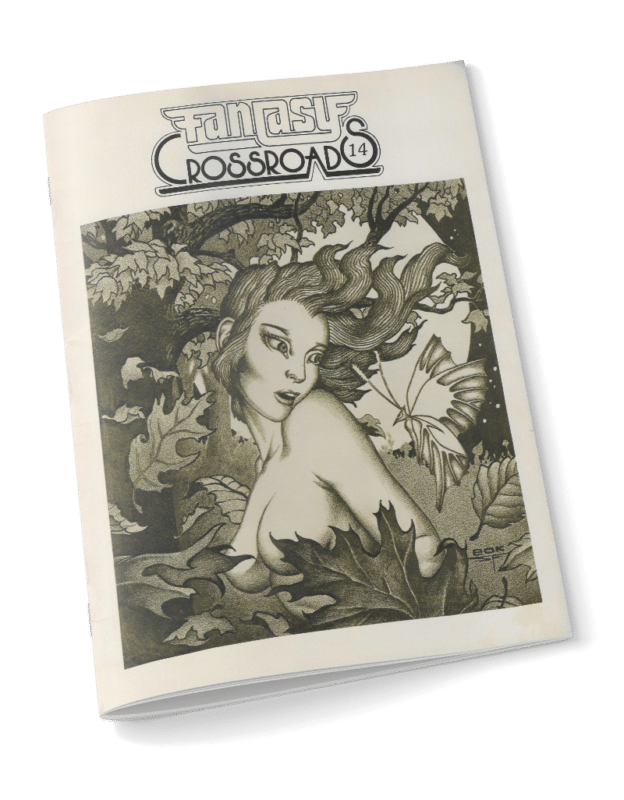
A fanzine or periodical edited by Jonathan Bacon. This is issue 14, from 1978, and contains the poem OH BABYLON, LOST BABYLON.
17
Dec
Dec
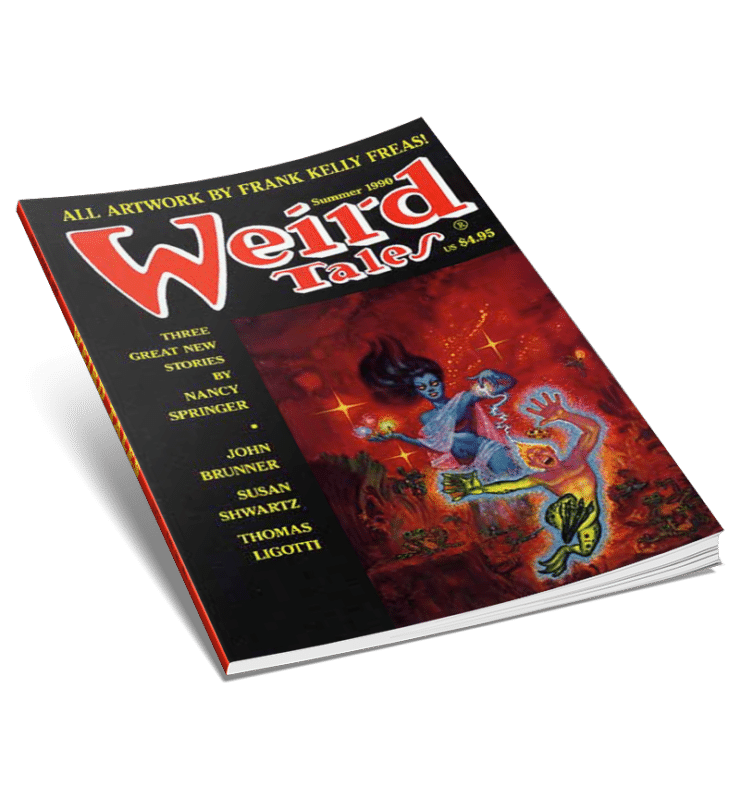
Weird Tales Volume 51 Number 4, Summer 1990. Contains the poem MEMORIES “Shall we remember…”.

13
Dec
Dec
Street & Smith’s Top-Notch Volume 97 Number 1, July 1935. Contains the first publication of BLOOD OF THE GODS, Featuring El Borak.

12
Dec
Dec
Howard sold two stories to Thrilling Adventures. This issue contains ‘The Treasure of Tartary’. It was originally titled Gold From Tartary. It was received by Howard’s agent on 15 November 1933 and Howard earned $42.50 for its publication.
Kirby O’Donnell is a fictional character created by Robert E. Howard. He is an American treasure hunter in early-twentieth century Afghanistan disguised as a Kurdish merchant, “Ali el Ghazi”. Howard only wrote three stories about O’Donnell, one of which was not published within his lifetime.
O’Donnell searches the forbidden city of Shahrazar, ruled by the Uzbek Shaibar Khan, for the lost treasure of Khuwarezm (which, legend states, was hidden to protect it from Genghis Khan).
09
Dec
Dec
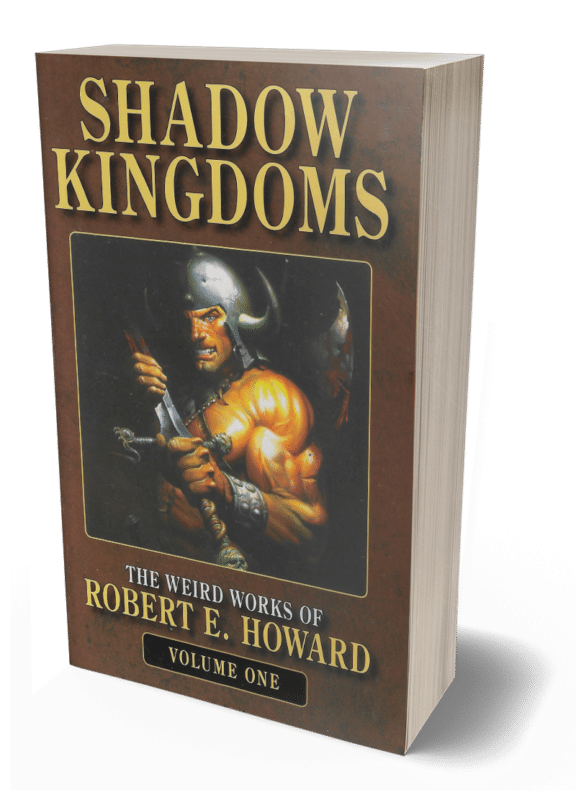
First in a series of 5 books. Meticulously restored text by renowned Howard scholar Paul Herman. This book includes material from the Wildside Press volumes Shadow Kingdoms and Moon of Skulls.
28
Oct
Oct
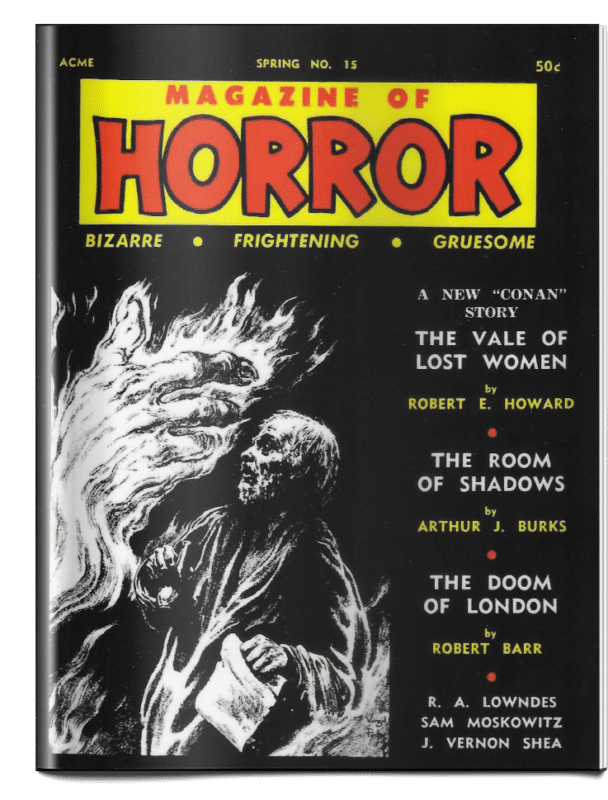
Magazine of Horror #15 (volume 3 number 3). Contains THE VALE OF LOST WOMEN. It was not published during his lifetime. Featuring Conan. This is the first publication. The text in this publication is an edited version of the original text. Either edited by de L. Sprague de Camp or perhaps Robert A. W. Lowndes (the editor of the magazine).

21
Oct
Oct
Robert E. Howard wrote poetry. He wrote it first in life, last in life, and throughout life. Howard completed around 300 stories for commercial sale and worked on 300 more. But he wrote over 700 poems, virtually none of them meant for commercial markets. His first publication outside of school was his poem “The Sea”, published in a local paper. His famous “All fled, all done…” couplet, borrowed from Viola Garvin, was allegedly the last words he typed. And in between, poetry gushed from him.
This third volume of a three-volume set collects the rest of all of Howard’s known poetry.

21
Oct
Oct
Robert E. Howard wrote poetry. He wrote it first in life, last in life, and throughout life. Howard completed around 300 stories for commercial sale and worked on 300 more. But he wrote over 700 poems, virtually none of them meant for commercial markets. His first publication outside of school was his poem “The Sea”, published in a local paper. His famous “All fled, all done…” couplet, borrowed from Viola Garvin, was allegedly the last words he typed. And in between, poetry gushed from him.
This second volume of a three-volume set collects the rest of all of Howard’s known poetry.