The Question of the East
Introduction
The Question of the East is a short article in which Howard considers what he saw as growing tension between Eastern and Western powers. Drawing on historical examples of Western defeats by Asian and Middle Eastern forces, he warns that Western assumptions of military and political superiority could prove dangerous.
Summary spoilers
The article opens with a call to the Western world to face what the author describes as “the Eastern question,” urging unity in light of a growing threat from the East. For the first time, the author claims, diverse Eastern groups—including Hindus, Buddhists, Muslims, and Pagans—are united in opposition to a single enemy: the West. This alliance is fueled by a shared “hatred and contempt” for Western nations and their dominance.
The author warns that vast regions of the Eastern world—spanning Africa, Asia, Arabia, and the islands—contain “millions of savage warriors” who await a signal to rise up and confront Western armies. Despite the West’s sense of superiority and invincibility, the author draws upon historical examples to challenge this confidence.
He highlights significant Eastern military leaders and conquerors—Attila, Bayezid, and Tamerlane—as evidence of the East’s historical capability to defeat European powers. The article references Bayezid’s victory at the Dardanelles, where he shattered the “united powers of Europe,” and points to centuries of European suffering under the rule of Turkic or Tartar forces.
The author further emphasizes the fragility of Western military strength by recalling the disastrous British campaign in Afghanistan in 1840. In that instance, an army of 20,000 soldiers marched through the Khyber Pass, but only a single man returned alive. This example underscores his assertion that the East is capable of inflicting severe defeats, even on well-equipped Western forces.
The article pivots to the modern threat posed by Japan, described as “the spider of the East,” actively consolidating power across the Orient and aspiring to global dominance. Japan, armed with modern weaponry and disciplined forces, symbolizes the East’s ability to challenge Western hegemony. The author warns that, should an Eastern invasion occur, the consequences for the West would be catastrophic. He draws a grim comparison, suggesting that America under Japanese rule would suffer the same fate as Armenia under the Turk—a reference to the atrocities committed against Armenians.
The article concludes without offering solutions but leaves the reader with a clear sense of urgency regarding the need for Western unity and preparedness against what the author perceives as a significant and impending threat.
Textual states
Shown in a practical developmental order where possible: synopsis/outline, numbered drafts, submission states, then published or posthumous states. This display order does not itself assert exact chronology or textual authority.
Characters in this Work
Counts are across exact Textual Versions currently represented. Additional textual research may add further appearances.
Publication appearances
 The Last of the Trunk Och Brev i UrvalParadox Entertainment Inc.September 2007↗
 The Last of the TrunkREH Foundation PressNovember 2007↗
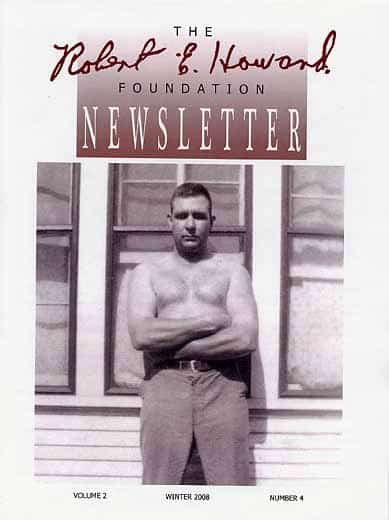 The Robert E. Howard Foundation Newsletter v2 #4Robert E. Howard FoundationWinter 2008↗
 Sentiment: An Olio of Rarer WorksREH Foundation PressDecember 2009↗
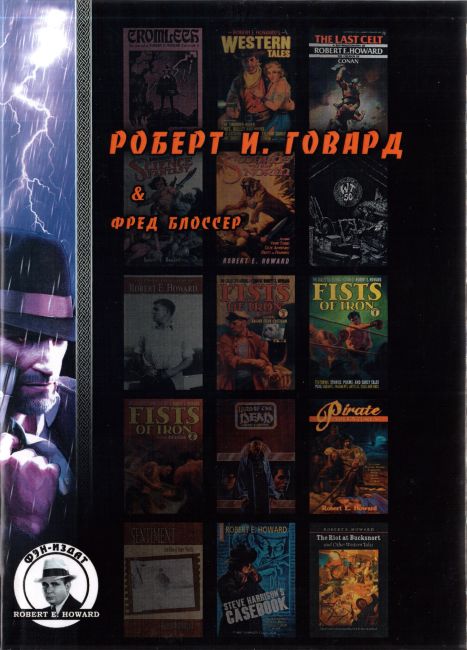 Малое собрание сочинений. Книга четвёртая (Maloe sobranie sochinenii. Kniga chetvertaia) (Small Collected Works. Book Four) Cover and publication information courtesy of the Russian website Laboratory of Fantasy .Independently Published2017↗