The Last White Man
Introduction
The Last White Man is a speculative future story built around racial conflict, imperial decline and the final survivor of a defeated civilization. The surviving narrative presents its future history through the racial and political assumptions of its period.
Summary spoilers
The story unfolds with the last white man, a physically imposing figure, hiding behind a boulder on a mountain slope, as he scouts the camps of his enemies below. Reflecting on the history of his race, he laments their fall from greatness to decadence, and ultimately, to near extinction.
His race, once rulers of the world, excelled in every endeavor from exploration and warfare to sports. However, over time, they succumbed to luxury and excess, weakening them until they were overtaken by a new, vigorous race—people who were once enslaved and marginalized. This new race, primarily of African descent, unified under a charismatic and ruthless mixed-breed Arab leader, used the weapons and tactics taught by the whites against them.
As the last survivor of his race, the protagonist contemplates the brutal wars that ensued, where his people, despite a valiant resistance, were outnumbered and overwhelmed by the combined forces of their former slaves and allies. Asia, too, crumbled under internal strife and the onslaught of the African armies, leading to a worldwide collapse of the old order.
In his final moments, the last white man prepares for his last stand as dawn breaks. He successfully repels initial attacks with his rifle, conserving his ammunition and managing to keep the attackers at bay. Eventually, his ammunition exhausted, he resorts to a large scimitar, fighting ferociously and killing many, but the sheer numbers against him are overwhelming.
In a heroic but futile display, he faces his end with defiance, standing tall amid the corpses of his foes, saluting the spirits of his ancestors with his blade raised before being overwhelmed by a barrage of spears from his enemies.
Textual states
Shown in a practical developmental order where possible: synopsis/outline, numbered drafts, submission states, then published or posthumous states. This display order does not itself assert exact chronology or textual authority.
From the letters
In a letter to his friend Tevis Clyde Smith from August 4, 1923, Howard discusses races, wars, and superiority. He was only 17 years old. He did write a story called "The Last Man". “The Last Man” and “The Last White Man” share striking similarities, reflecting common themes and narrative structures that are characteristic of Howard’s speculative fiction.
I shall write a story entitled “The Last Man” as a warning to the white races. If the West falls before the East, it won’t be because I haven’t warned the white races. Well, maybe if I progress, which I doubt much, in a few years I’ll become such a nuisance that the Dalai Lama will take notice of me and my career will end suddenly.
According to another letter to Tevis Clyde Smith (#101) from circa February 1929 Howard had submitted a very short story with this title to Weird Tales in 1925 but it was rejected. The complete story is lost. There is a 6400-word unfinished manuscript in existence.
Comparing The Last Man and The Last White Man
Here are some of the key parallels between the two stories:
- Post-Apocalyptic Settings: Both stories are set in dystopian futures where the world has undergone drastic changes due to wars and the rise and fall of civilizations. These settings are marked by a decline from a previous state of global dominance to near extinction of the ruling races.
- Racial Conflict and Warfare: A central theme in both stories is the conflict between races, which plays a critical role in the narrative. In “The Last Man,” the conflict involves a newly unified black empire rising against the white and other races, eventually dominating the world. Similarly, in “The Last White Man,” there’s a global shift in power dynamics where the African races, united under a powerful leader, overthrow the white-dominated world order.
- Decline of a Dominant Race: Both narratives explore the theme of a dominant race (white in both stories) that has become decadent and weak due to luxury and internal corruption, leading to their downfall. This decline is contrasted with the rise of a previously subjugated or marginalized race.
- Last Survivor Theme: Both stories focus on the motif of the "last" survivor of the white race, who reflects on the past glories and the current demise of his people. These characters are portrayed as physically robust and mentally resilient, embodying the final remnants of their cultures.
- Tragic Heroism: The protagonists in both stories display heroic traits, facing their inevitable doom with defiance and courage. Their final stands serve as a dramatic climax to the narrative, showcasing their individual might against overwhelming odds.
- Cyclical Nature of Empires: Howard underscores the cyclical rise and fall of civilizations in both stories, suggesting that no empire is permanent. Each dominant race eventually faces decline, often due to internal decadence and the external pressures of more vigorous, rising powers.
- Speculative Exploration of Future Warfare: The stories speculate on the future of warfare, including the use of modern weapons and tactics. These elements serve as a backdrop to the dramatic, often brutal, clashes that define the plots.
These similarities underscore Howard’s fascination with themes of decline, racial conflict, and the heroic, albeit often futile, resistance against inevitable historical shifts. The stories offer a bleak, deterministic view of history where the past might of civilizations serves only as a poignant reminder of their transient nature. Howard’s use of these motifs provides a canvas to explore broader philosophical questions about fate, power, and survival.
Publication appearances
 The Howard Collector #5 (Volume 1 Number 5)Glenn LordSummer 1964↗
 L'ultimo uomo biancoEdizioni di ArDecember 1981↗
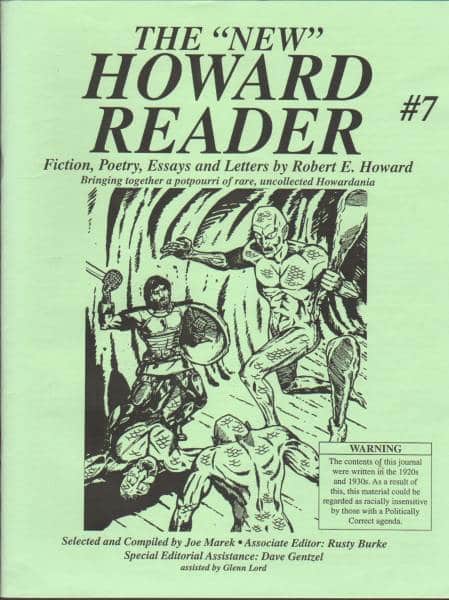 The "New" Howard Reader #7Joe & Mona MarekSpring 2000↗
 La Saga di Robert Howard: Il sepolcro misterioso, Taccuino 10Yorick Fantasy Magazine2004↗
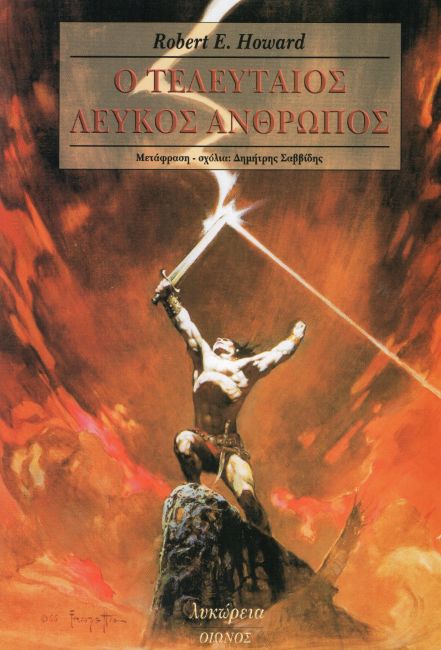 Ο τελευταίος λευκός άνθρωπος O teleetaios leekos anthropos The Last White ManΛυκώρεια (Lycorea)May 2005↗
 Delirio, Ciencia Ficción y Fantasía número 4 (Delirium, Science Fiction and Fantasy 4)La Biblioteca del Laberinto (Spain)December 2009↗
 Anniversary: Glenn Lord and The Howard CollectorDennis McHaneyJune 2011 (special limited 50 copies), November 17th (regular hardcover and softcover)↗
 Adventures in Science FantasyREH Foundation PressMay 2012↗
 Delirio, Ciencia Ficción y Fantasía número 12 (Delirium, Science Fiction and Fantasy 12)La Biblioteca del Laberinto (Spain)March 2013↗
 L'ultimo biancoEdizioni di ArMay 2013↗
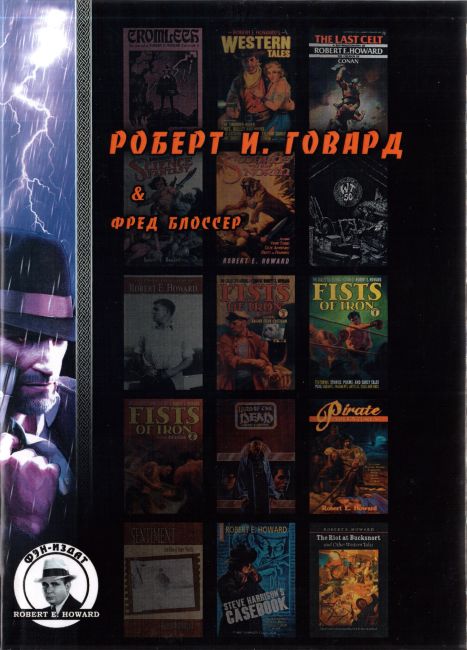 Малое собрание сочинений. Книга четвёртая (Maloe sobranie sochinenii. Kniga chetvertaia) (Small Collected Works. Book Four) Cover and publication information courtesy of the Russian website Laboratory of Fantasy .Independently Published2017↗
 L'ultimo bianco e 8 saggi sul Bardo di Cross Plains (The Last White Man and 8 Essays on the Bard of Cross Plains)War Wave EditoreNovember 2022↗
 Adventures in Science Fantasy - Ultimate EditionREH Foundation PressJanuary 31, 2025↗
 Almuric y otras historias de ci-fi (Almuric and Other Sci-Fi Stories)La Hermandad del Enmascarado (Spain)March 2025↗