Iron Men
Introduction
Howard completed the first version of Iron Men (draft a) in March or April 1929 and sent it to Fight Stories, where it was apparently considered too long. He produced two progressively condensed drafts, b and c; draft c was submitted, but the version eventually published as Iron Man in Fight Stories, volume 3, number 1 (June 1930), was heavily edited and about 10,000 words shorter than Howard’s text.
Fiction House initially had difficulty locating the manuscript, but eventually found and accepted it for $200. In a letter to Tevis Clyde Smith circa February 1930, Howard called it “by far the best fight story I ever wrote” and noted that, although Steve Costigan and his brother Iron Mike appear, the central figure is heavyweight Mike Brennon and the story is “harsh and brutal” rather than humorous.
After publication, Howard complained in a May 1930 letter that the magazine had changed the title, chapter headings and many passages, in some places distorting his original meaning.
When Howard sent his story to Fiction House there seems to have been problems finding the story. In a letter to his friend Tevis Clyde Smith circa January 1930 Howard wrote:
Got a letter from Fiction House. I’d written about “Iron Men.” He said they hadn’t seen it but would try to trace it. I’d told him I’d rewrite from the copy and send it to him, if he hadn’t gotten it. He said to hold everything till he heard from me again. I hope he’ll find it and take. I don’t see how in Hell a carefully addressed letter gets lost in the mail. He also said — in response to my remark that I was preparing more Steve Costigan stories — “I am glad to hear that Steve Costigan is going to swashbuckle his way across more pages of Fight Stories. All of us here are for him.” Now watch me get the next seventeen back. I’m not blaming the editors as much as I used to do. I write a good story, they enthuse about it, next time I fall so much below standard — whatever that is — they get discouraged about me and forget all about me. Oh well —
Fiction House, fortunately, found the story and Howard received $200. In another letter, circa Ferbruary, 1930 to Tevis he wrote:
Well, here is the letter. I haven’t much to add. Fiction House — Fight Stories — took another Steve Costigan story for $100. Also they finally located “Iron Men” and accepted it for $200. This is by far the best fight story I ever wrote. In many ways the best story of any kind I ever wrote. I guess my destiny is tied up with the Costigan family. I’ve never sold Fight Stories a story that didn’t deal with them. The central figure of “Iron Men” isn’t a Costigan but both Steve and his brother Iron Mike figure in the story. This tale isn’t humorous like the others. It’s harsh and brutal; I don’t know whether the readers will like it or not.
And in a letter to Tevis circa May 1930 he wrote:
Fight Stories was kind enough to give me the cover design this month but they changed the title and the chapter headings and made quite a number of changes throughout the story which seemed not only needless to me, but in some places entirely distorted the original meaning. I think some of the changes must surely have been mistakes in printing.
Summary spoilers
Mike Brennon, a formidable contender in the boxing world, is renowned for his remarkable endurance and strength, qualities that have defined his career and life. His story is narrated by Steve Amber, a close observer and participant in Mike's journey. From a carnival fight in Nevada, where Mike's natural talent and toughness first come to light, to his encounters with various figures in the boxing world, Mike's path is marked by his relentless pursuit of success and recognition.
The narrative delves deep into Mike's personal motivations, revealing a profound love for Marjory Walshire, a girl he met in Arizona. His dedication to ensuring a better life for Marjory drives him back into the brutal world of boxing, despite the physical toll it takes on him. Throughout his career, Mike battles numerous opponents, earning significant purses but at great cost to his health and well-being.
Mike's relationship with Marjory, his struggle with the demands of his career, and his interactions with figures such as Steve Amber, Spike Ganlon, and various opponents, paint a vivid picture of a man caught between the world of brutal sports and his desires for a normal life. The story reaches a climax when Marjory, in a desperate attempt to save Mike from further harm, drugs him before a critical fight, leading to his defeat but also opening the door to a new chapter in their lives.
Textual states
Shown in a practical developmental order where possible: synopsis/outline, numbered drafts, submission states, then published or posthumous states. This display order does not itself assert exact chronology or textual authority.
Comparing the first and final story
analysis of the first version (draft) and the final version of the story "Iron Men," several key differences and developments in the narrative and character portrayal stand out. These differences highlight Robert E. Howard's evolving vision for the story, its characters, and the thematic elements he wished to emphasize.
Differences in Character Development
- Mike Brennon's Backstory: In the draft, Mike Brennon's background and motivations are less developed, focusing mainly on his physical prowess and fighting spirit. The final version delves deeper into his personal history, struggles, and the sacrifices he makes for love, providing a richer, more emotional context for his actions.
- Marjory's Role: Marjory is introduced later in the story but plays a critical role in the final version. Her actions, motivated by love and desperation to save Mike from further harm, add a layer of complexity to the narrative, showcasing the impact of Mike's career on those he loves.
- Steve Amber's Perspective: The presence of Steve Amber, who narrates parts of the story, offers insights into the boxing world and Mike Brennon's character. His perspective enriches the narrative, providing a more nuanced view of the protagonist and the choices he makes.
Evolution of Thematic Elements
- Sacrifice and Love: The theme of sacrifice is more pronounced in the final version, with detailed exploration of the lengths Mike goes to for Marjory's happiness and future. This theme is intertwined with the concept of love, demonstrating its power and the toll it takes on individuals.
- Pride and Fallibility: The final version highlights Mike's pride and its consequences more explicitly, illustrating a classic narrative of rise, fall, and redemption. Mike's inability to see beyond his pride and the eventual realization of its impact on his life and Marjory's provide a poignant commentary on human fallibility.
- The Brutality of Boxing: Both versions depict the harsh realities of the boxing world, but the final version delves deeper into the physical and psychological toll it takes on fighters. The detailed descriptions of Mike's fights, injuries, and the eventual knock-out emphasize the sport's brutality and its lasting effects on participants.
Narrative and Structural Changes
- Increased Depth and Detail: The final version contains more detailed descriptions of settings, characters, and boxing matches, creating a vivid and immersive reading experience. This includes the expansion of scenes that highlight the boxing world's excitement and danger.
- Pacing and Suspense: The final version builds suspense more effectively, leading up to Mike's ultimate fight and its aftermath. The narrative pacing allows for the development of tension, culminating in a dramatic conclusion that underscores the story's thematic messages.
In summary, the transition from the draft to the final version of "Iron Men" showcases Robert E. Howard's skill in enhancing character development, thematic depth, and narrative complexity. The final version offers a more rounded and impactful exploration of themes like sacrifice, love, pride, and the brutal reality of the boxing world, making it a compelling and nuanced story.
Characters in this Work
Counts are across exact Textual Versions currently represented. They are not assumed exhaustive until the underlying texts have been analyzed.
Publication appearances
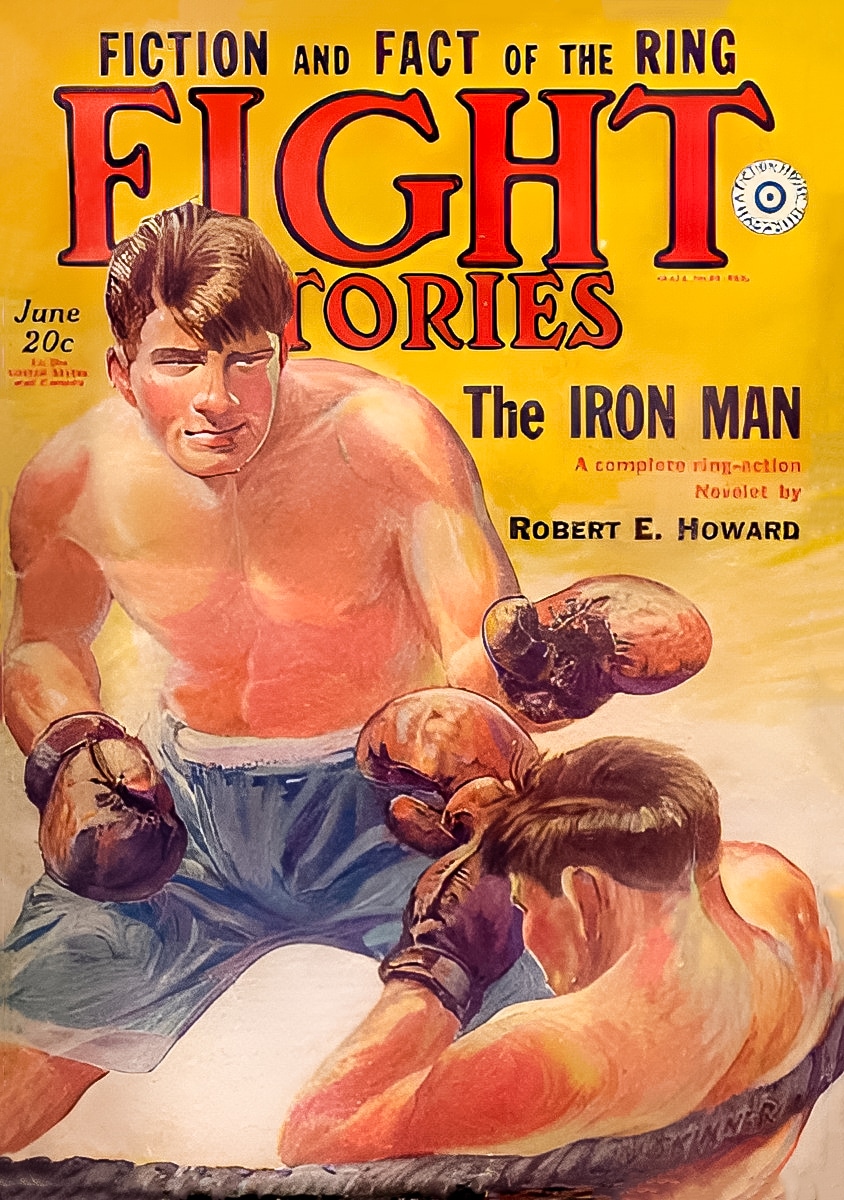 Fight Stories - June 1930Fight Stories, Inc. (Fiction House)June 1930↗
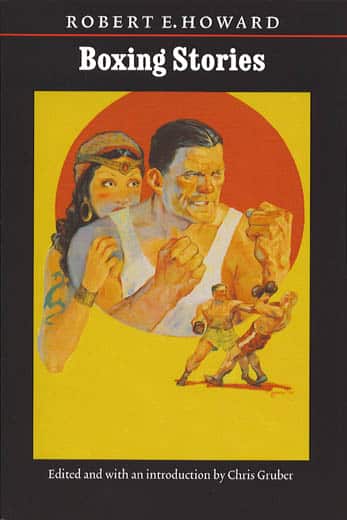 Boxing StoriesUniversity of Nebraska Press - Bison BooksApril 2005↗
 Hombres de hierro y otros relatos del cuadrilátero ( Iron Men and Other Stories from the Ring )La Biblioteca del Laberinto (Spain)May 2011↗
 Fists of Iron Round 1REH Foundation PressJune 2013↗
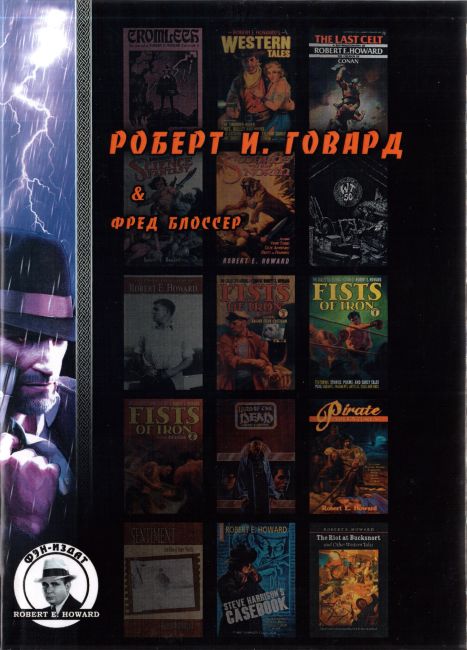 Малое собрание сочинений. Книга четвёртая (Maloe sobranie sochinenii. Kniga chetvertaia) (Small Collected Works. Book Four) Cover and publication information courtesy of the Russian website Laboratory of Fantasy .Independently Published2017↗
 Fists of Iron Round 1 - UEREH Foundation PressMay 2025↗