In his own image
Introduction
In His Own Image is an essay of about 2,200 words on New Orleans, drawing on Howard’s visit to the city. It describes the Latin Quarter, the people Howard encountered and the social contrasts he observed there.
Summary spoilers
The essay opens with Howard's reflections on the dilapidated grandeur of New Orleans' Latin Quarter. He describes the once aristocratic district that has now decayed into overcrowded tenements housing Italian immigrants, capturing the sense of a past glory now faded. These immigrants, he notes, have taken over the homes once belonging to French Creoles, leading to a cultural displacement that mirrors the physical decay of the buildings.
Howard introduces Joe Rizzo, a Sicilian immigrant who has achieved financial success through sheer hard work, owning several restaurants. Yet, despite his economic success, Rizzo's life is depicted as one of relentless toil, devoid of the pleasures that wealth is supposed to bring. This theme of hard work without enjoyment is underscored by Howard's descriptions of the Rizzos’ daily routines and their interaction, or lack thereof, with their customers.
As Howard delves deeper into the city, he encounters various other characters who contribute to the rich tapestry of New Orleans' diverse population. These include a cheerful but incomprehensible Spanish barber, and various other individuals from different ethnic backgrounds. The narrative builds a picture of a city bustling with life but also marked by social and racial divides.
The climax of Howard’s exploration comes when he encounters a grotesquely deformed man, a descendant of the Cajun community, whose appearance challenges the reader's understanding of humanity. This man, a product of severe genetic isolation and interbreeding, represents the darker undercurrents of genetic and social decay lurking beneath the city’s vibrant exterior.
The essay concludes on a poignant note with Howard overhearing a street preacher's declaration that "God made man in his own image." This statement resonates ironically with Howard's recent encounter, highlighting the contrast between theological ideals and the harsh realities observed in the city.
Textual states
Shown in a practical developmental order where possible: synopsis/outline, numbered drafts, submission states, then published or posthumous states. This display order does not itself assert exact chronology or textual authority.
Characters in this Work
Counts are across exact Textual Versions currently represented. Additional textual research may add further appearances.
Publication appearances
 The Last of the Trunk Och Brev i UrvalParadox Entertainment Inc.September 2007↗
 The Last of the TrunkREH Foundation PressNovember 2007↗
 Sentiment: An Olio of Rarer WorksREH Foundation PressDecember 2009↗
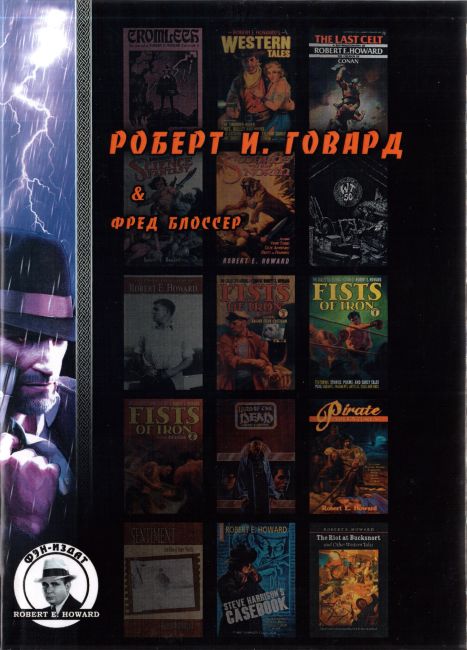 Малое собрание сочинений. Книга четвёртая (Maloe sobranie sochinenii. Kniga chetvertaia) (Small Collected Works. Book Four) Cover and publication information courtesy of the Russian website Laboratory of Fantasy .Independently Published2017↗
 Post Oaks and Sand Roughs & Other Autobiographical WritingsREH Foundation PressJune 2019↗