The Coming of El Borak
Introduction
The Coming of El Borak is an unfinished El Borak story that was not published during Howard’s lifetime. It first appeared in English in the chapbook The Coming of El Borak in September 1987. The surviving story follows Frank Gordon among Afridi tribesmen near the British-Indian frontier.
Summary spoilers
"The Coming of El Borak" begins with Khoda Khan, an Afridi tribesman, recalling the events to a listener in Delhi. He contrasts the physical might of the tribesmen with the organizational and strategic strengths that allow the British to maintain control over India. Khoda Khan then delves into a tale involving mullah Hassan and Marion Sommerland, a British woman, set against the backdrop of tribal lawlessness and the British colonial presence.
Marion is kidnapped by Khoda Khan and his companions from her ride near the border for ransom, reflecting the lawlessness and audacity of the Afridi tribes. Despite their rough ways, the kidnappers are shown to have standards, as they protect her from more severe mistreatments and argue about her fate. The story vividly describes their journey back to the village of Kadar, their interactions with Marion, and the internal conflicts among the tribesmen about how to handle the situation.
The Afridi chief, Khumail Khan, and the village mullah both desire Marion for themselves, leading to a tense standoff in the village. The tribesmen who kidnapped her, led by Yar Ali Khan, resist the chief's and the mullah's demands, showing a complex mix of respect and protective instinct towards Marion. The mullah suggests keeping her under his care to convert her, which is just a ruse to gain possession of her.
Yar Ali Khan's opposition is based on both personal principles and a strategic understanding of the situation, indicating his leadership qualities and moral code that distinguishes him from the typical depiction of tribal warriors. The story highlights the cultural and moral complexities within the Afridi society, which is often stereotyped as uniformly savage or primitive.
The narrative is unfinished, but it sets up a dramatic confrontation involving colonial powers, tribal factions, and individual characters caught in a web of power, honor, and intrigue.
Textual states
Shown in a practical developmental order where possible: synopsis/outline, numbered drafts, submission states, then published or posthumous states. This display order does not itself assert exact chronology or textual authority.
Characters in this Work
Counts are across exact Textual Versions currently represented. Additional textual research may add further appearances.
Publication appearances
 El Borak l' É ternel (El Borak the Eternal)NeOMay 1984↗
 The Coming of El BorakCryptic PublicationsSeptember 1987↗
 E l Borak l' É ternel (El Borak the Eternal)Fleuve NoirJune 1992↗
 Кровь богов (Krov bogov) (Blood of the Gods) P ublication information courtesy of the Russian website Laboratory of Fantasy .Северо-Запад (Severo-Zapad) (North-West)1998↗
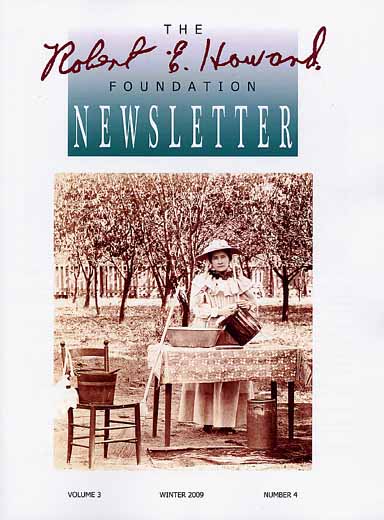 The Robert E. Howard Foundation Newsletter v3 #4Robert E. Howard FoundationWinter 2009 (mailed December 2009)↗
 The Early Adventures of El BorakREH Foundation PressMarch 2010↗
 El Borak, Avventuriero del DesertoElaraOctober 2018↗
 Francis Xavier Gordon, El Borak Volume 2Providence PressNovember 2020↗
 The Early Adventures of El BorakREH Foundation PressSeptember 2024↗