Introduction
After the Game was written for *The Yellow Jacket*, the student paper of Howard Payne College. It was published in Volume XIII, No. 7, on October 27, 1926. This play is a comedic look at college students returning from a football game, filled with witty dialogue and slapstick humor.
Introduction
After the Game was written for The Yellow Jacket, the student paper of Howard Payne College. It was published in Volume XIII, No. 7, on October 27, 1926. This play is a comedic look at college students returning from a football game, filled with witty dialogue and slapstick humor.
Published in:
- YELLOW JACKET Volume XIII Number 7, Howard Payne College, October 27, 1926
- CERTIORARI ACCEPTED #1, Paul Herman, August 1999 [Distributed in REHupa #158]
- THE COMPLETE YELLOW JACKET, Hermanthis, December 1999 (1st edition)
- THE COMPLETE YELLOW JACKET, Hermanthis, October 2001 (2nd edition)
- THE COMPLETE YELLOW JACKET, Hermanthis, 2002 (2nd printing, 2nd edition)
- WEST IS WEST & OTHERS, Roehm & Runions, February 2006
- WEST IS WEST & OTHERS, Roehm’s Room Press, April 2007
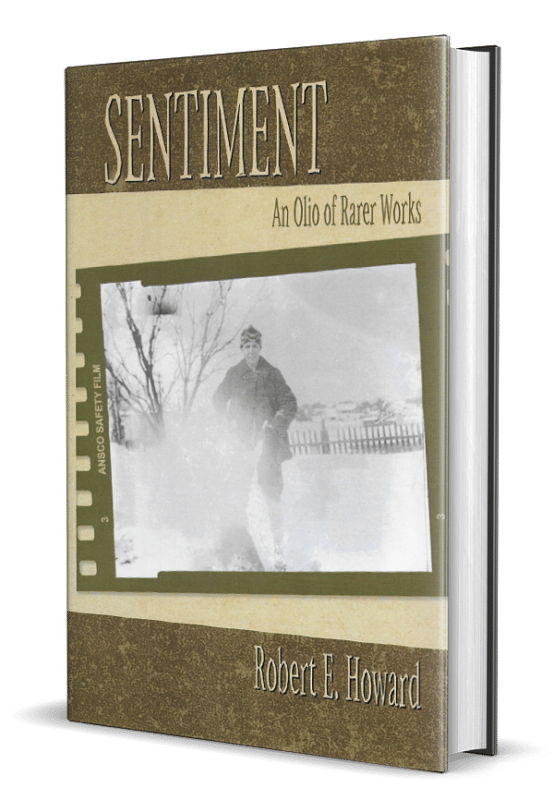
- SENTIMENT: AN OLIO OF RARER WORKS, REH Foundation Press, December 2009
- SCHOOL DAYS IN THE POST OAKS, REH Foundation Press, May 2011
- ROBERT E. HOWARD’S COLLECTED WORKS, Jame-Books, February 2013
Analysis
After the Game is a humorous, fast-paced play that highlights the camaraderie and misfortunes of a group of college students after attending a football game. The dialogue is filled with 1920s slang and comedic exaggeration, making it a lively representation of student life at the time. The play’s structure, with quick scene changes and snappy exchanges, resembles vaudeville humor and slapstick comedy.
The central joke revolves around Tommy, who believes he has lost his train ticket and endures an absurdly difficult journey home—only to find out in the end that his ticket was safe all along. Howard’s comedic timing and escalation of Tommy’s misfortunes make this play a rare example of his talent for humor, contrasting with the adventure and fantasy tales for which he is better known.
Character List
- Bertie – A college student who remains comfortable and amused by Tommy’s suffering, ultimately revealing that he had Tommy’s ticket all along.
- Tommy – Tommy O’Brien, the unfortunate protagonist who believes he has lost his train ticket and endures a ridiculous journey home.
- Spike – Spike Kennedy, a student with a sharp wit, known for making wisecracks.
- Johnny – Johnny Graves, another student in the group, who plays a minor but humorous role.
- Jerry – Jerry Brock, a reckless student who disregards traffic rules and contributes to the general chaos.
- Traffic Cop – A comical authority figure who overreacts to Johnny’s sneeze and enforces traffic laws.
- Conductor – The gruff railway official who refuses to believe Tommy’s story and throws him off the train.
- Brakeman – Another railway worker who kicks Tommy off when he tries to sneak back onto the train.
- Old Man – A minor character who briefly appears wearing a slicker, prompting a joke.
- Jalor Student – A large, imposing student from the rival team’s school, referenced humorously.
- Various Students – Background characters who contribute to the rowdy atmosphere.
Conclusion
While After the Game is far removed from Robert E. Howard’s signature sword-and-sorcery tales, it demonstrates his skill in crafting sharp dialogue and comedic storytelling. The play’s humor, drawn from exaggerated situations and fast-paced wit, makes it an entertaining glimpse into 1920s college life. The irony of Tommy’s suffering, ending in the realization that his ticket was never lost, serves as a perfect comedic twist. This short play is a testament to Howard’s versatility as a writer, proving that his talents extended beyond action and fantasy into the realm of humor and satire.