

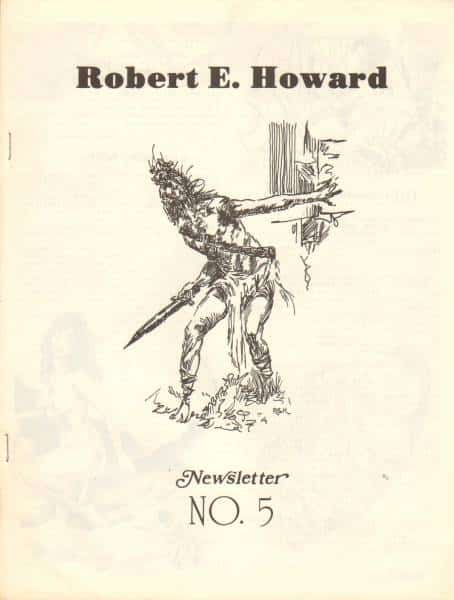
Long before the Robert E. Howard Foundations newsletters, there was a series of newsletters published by Dennis McHaney. These were distributed to the subscribers of The Howard Review.
Here is the contents of issue #5 with 6 pages.
14
Mar
Mar
Long before the Robert E. Howard Foundations newsletters, there was a series of newsletters published by Dennis McHaney. These were distributed to the subscribers of The Howard Review.
Here is the contents of issue #5 with 6 pages.
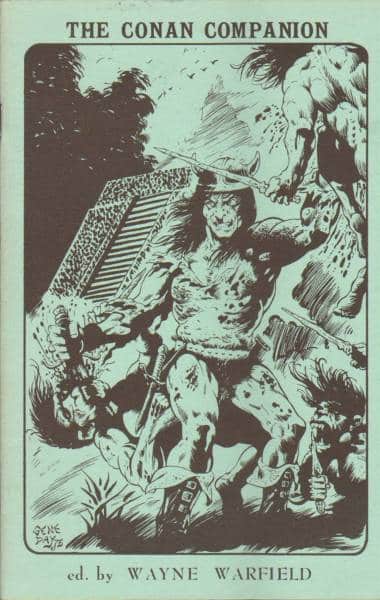
The Conan Companion, edited by Wayne Warfield and published by Hall Publications in 1976, is a notable 24-page booklet that holds a special place in the history of Robert E. Howard (REH) and his iconic character, Conan. Originally sold for $2.75, the booklet now often commands a selling price of around $25, reflecting its value among collectors and fans.
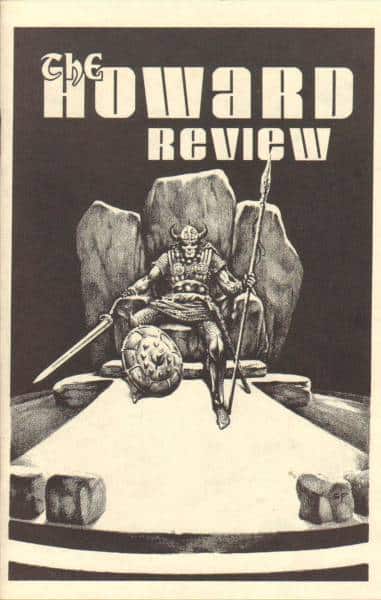
The Howard Review #1 (second printing). Published by Dennis McHaney in 1975.
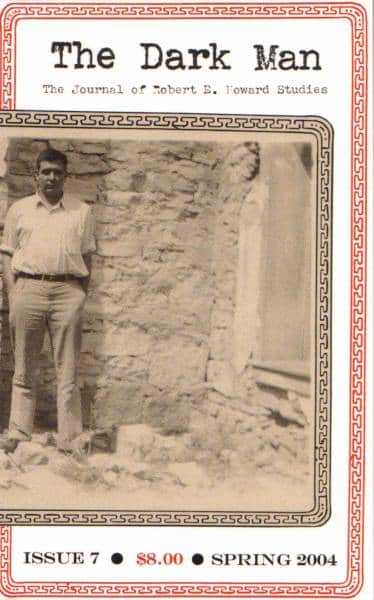
A chapbook from 2004. Edited by Frank Mark Hall. The first edition was published by Mind’s Eye HyperPublishing / Iron Harp Publications in 2003 and was limited to 150 copies.
The Dark Man: Journal of Robert E. Howard and Pulp Studies is a peer-reviewed scholarly journal devoted to the academic study of Robert E. Howard’s literary legacy as well as the literary historical and print culture contexts associated with it. The journal seeks to publish full-length articles, brief critical notes and commentaries, bibliographies, reviews of books, and other scholarship that treats Howard’s life, time, literary work, and associated topics such as Weird Tales, H.P. Lovecraft, and the concept of a transhistorical pulp fiction aesthetic.
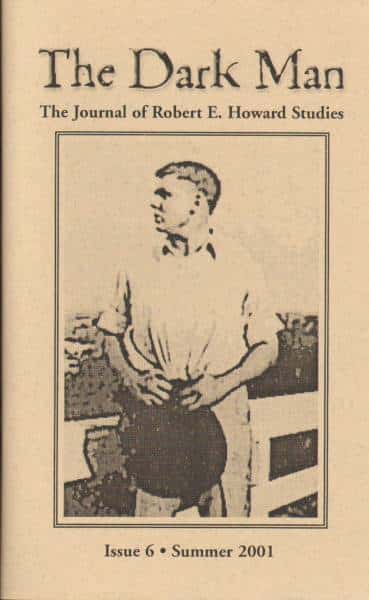
A chapbook from 2001. Edited by Frank Coffman.
The Dark Man: Journal of Robert E. Howard and Pulp Studies is a peer-reviewed scholarly journal devoted to the academic study of Robert E. Howard’s literary legacy as well as the literary historical and print culture contexts associated with it. The journal seeks to publish full-length articles, brief critical notes and commentaries, bibliographies, reviews of books, and other scholarship that treats Howard’s life, time, literary work, and associated topics such as Weird Tales, H.P. Lovecraft, and the concept of a transhistorical pulp fiction aesthetic.

Wildside Press has published Robert E. Howard’s ten book series called Weird Works, which comprises Howard’s entire body of collected work published in the pulp magazine Weird Tales, and restored to the original magazine texts. Shadow Kingdoms: The Weird Works of Robert E. Howard is the first volume in this series.

The Barbaric Triumph: A Critical Anthology on the Writings of Robert E. Howard. The Barbaric Triumph examines all aspects of the life and work of Robert E. Howard — the originator of the sword-&-sorcery fantasy genre and the creator of Conan the Barbarian. Featured are essays by Leo Grin, Edwrad A. Waterman, Charles Hoffman, Paul Spencer, Mark Finn, Steven R. Trout, Lauric Guillaud, Scott Connors, George Knight, Don Herron, and more.
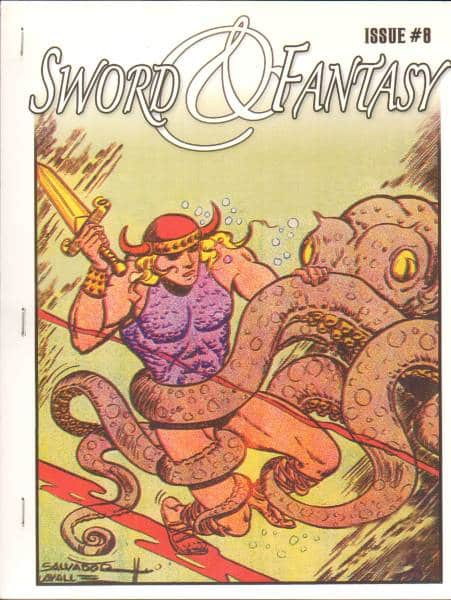
Fanzine published by James Van Hise. Contains a very badly translated story from the Spanish comic book, lots of reviews and essays. It also features a story of Solomon Kane, written by Van Hise. Actually quite good.

The American illustrator and artist with the name of Roy Gerald Krenkel is probably a household name for most Robert E. Howard fans. He is often referred to as the father of heroic fantasy. Very often he is included in the list of some of the best known and most influential fantasy artists like J. Allen St. John and Frank Frazetta.

H. P. Lovecraft and Robert E. Howard are two of the titans of weird fiction of their era. Dominating the pages of Weird Tales in the 1920s and 1930s, they have gained worldwide followings for their compelling writings and also for the very different lives they led. The two writers came in touch in 1930, when Howard wrote to Lovecraft via Weird Tales. A rich and vibrant correspondence immediately ensued. Both writers were fascinated with the past, especially the history of Roman and Celtic Britain, and their letters are full of intriguing discussions of contemporary theories on this subject.
Gradually, a new discussion came to the fore-a complex dispute over the respective virtues of barbarism and civilisation, the frontier and settled life, and the physical and the mental. Lovecraft, a scion of centuries-old New England, and Howard, a product of recently settled Texas, were diametrically opposed on these and other issues, and each writes compellingly of his beliefs, attitudes, and theories. The result is a dramatic debate-livened by wit, learning, and personal revelation-that is as enthralling as the fiction they were writing at the time. All the letters have been exhaustively annotated by the editors.