Introduction
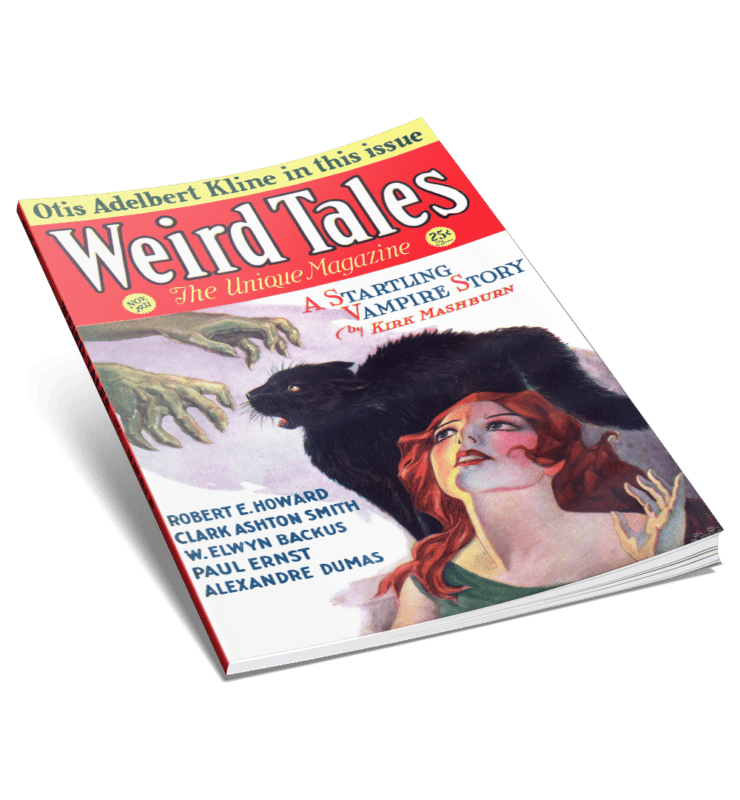
“The Black Stone” is a horror short story first published in Weird Tales, November 1931. Howard’s records note payment as $56 (sold for $64). The tale inaugurates two key Mythos touchstones in Howard’s fiction: the mad poet Justin Geoffrey and Friedrich von Junzt’s forbidden tome Unaussprechlichen Kulten (Nameless Cults). Operating squarely within the Cthulhu Mythos tradition, it mirrors the formal pattern of source-hunting scholarship, eldritch artifact, and a midnight revelation — yet in Howard’s brisk, visceral mode rather than Lovecraft’s antiquarian drift.
From the letters:
In a letter (#149) to his friend Tevis Clyde Smith, probably in December 1930 he wrote:
The Weird Tale story, a short one that brought $64, was infinitely better, though marred by a clumsy style and a too melodramatic development. It carried out the theme I mentioned to you in a previous letter; the title is “The Black Stone,” and is the best attempt at bizarre literature that I have yet sold. I have a still shorter and better story, “The Thing on the Roof,” which I have not yet sent Farnsworth and which I may not send him, since he says he is stocked up. But this story is by far the best thing I have ever written and one which I am really inclined to believe approaches real literature, distantly, at least.
In October 1931 he wrote (letter #180) to Lovecraft and said:
I hope you liked the “Bal-Sagoth” yarn. As for “The Black Stone” my story appearing in the current Weird Tales, since reading it over in print, I feel rather absurd. The story sounds as if I were trying, in my feeble and blunderingly crude way, to deliberately copy your style. Your literary influence on that particular tale, while unconscious on my part, was none the less strong.
This story also was published in an Anthology (Grim Death) in the UK in 1932. Howard was made aware of this from a letter from Lovecraft. We can read Howard’s reply in a letter from around December 1932 (letter #225b).:
No, I didn’t know my “Black Stone” had landed in the Not At Night anthology. I’m so far off the beaten track of literature *geographically, that I get only vague hints of what goes on in the world of pen and ink.
The Black Stone was also mentioned in a letter from Otis A. Kline to August Derleth in August 9, 1944:
August 9, 1944
Mr. August Derelith
Sauk City, Wisconsin.Dear Derelith:
Thanks for yours of the 7th .
That preliminary sifting down to 29 titles looks to me like a good, representative collection of Bob’s work in the weird and fantastic field.
I note that you include “The Black Stone” on which book rights have already been sold. Do you think it should appear in both collections, published a year or so apart?
I don’t have any further suggestions or deletions at this time, but wondered about this item. I do agree with what you say about the Conan yarns. A steady, unbroken diet of violent action and sabre-hacking would, I think, pall on the reader.
I’ll look forward to hearing further from you on this in due course, and also to trying that additional Someone in the Dark in the reprint market when it comes in. Best regards.Cordially,
[Kline]
See also: The Black Stone (early draft).
Short summary:
An erudite unnamed narrator studies Von Junzt’s Black Book and travels to the Hungarian village of Stregoicavar to inspect a sinister monolith known as the Black Stone (linked in folklore to nightmares and Midsummer rites). After hearing local lore (from a tavern-keeper, his nightmare-plagued nephew, and a skeptical schoolmaster), the narrator spends Midsummer Night at the Stone and witnesses a spectral replay of a prehistoric-survival coven: a wolf-masked priest, a votaress scourged in a frenzied dance, a hag drummer, and an infant sacrifice—culminating in the appearance of a bloated toad-like entity atop the monolith. Seeking proof, he excavates the battlefield ruin of Count Boris Vladinoff and recovers a lacquered case taken from the Ottoman scribe Selim Bahadur in 1526. Selim’s manuscript confirms that the Turks found and destroyed a mountain cult and slew the cavern-bound monstrosity with steel and sanctified rite. Horrified, the narrator casts the case and a golden idol-pendant into the Danube, concluding the Stone is a Key—a surviving link to an abominable, pre-human past that briefly reopens each Midsummer.
Characters:
- Unnamed Narrator – Scholarly traveler who reads Von Junzt, visits Stregoicavar, witnesses the Midsummer vision, and later corroborates it via Selim Bahadur’s manuscript.
- Friedrich von Junzt – German occult savant, author of Unaussprechlichen Kulten (the “Black Book”); his hints about the Stone as a “Key” set the plot in motion.
- Alexis Ladeau – Von Junzt’s friend who burned the author’s final notes and then killed himself; emblem of the book’s lethal knowledge.
- Justin Geoffrey – Mad poet of The People of the Monolith; visited the area earlier and later died screaming in an asylum.
- Tavern-keeper of Stregoicavar – Local source of tradition; points out the Stone’s location and recounts the village’s avoidance of it.
- Tavern-keeper’s Nephew – As a child slept near the Stone; as an adult suffers recurring, indistinct nightmares of fire, drums, and the Stone atop a black castle.
- Schoolmaster – Educated skeptic who links the site to a fertility/witch cult and the older name “Xuthltan.”
- Selim Bahadur – Ottoman soldier-scribe; his recovered manuscript details the Turks’ destruction of the mountain cult and the slaying of the cavern monster.
- Count Boris Vladinoff – Polish-Hungarian knight who died at Schomvaal; the lacquered case lay beneath the ruins that entombed him.
- Wolf-masked Priest – Coven officiant who flogs the votaress, chants the ineffable Name, and sacrifices the infant against the Stone during the spectral rite.
- Votaress – Frenzied dancer who embraces and kisses the monolith amid flagellation and smoke during the Midsummer rite.
- Hag Drummer – Old woman beating a black drum beside the brazier; keeps the rite’s rhythm.
- Worshippers of Xuthltan – Degenerate, squat villagers of an older, mixed stock; their sabbat is seen as a ghostly recurrence on Midsummer.
- Toad-like Entity (Master of the Monolith) – Bloated, leering being that manifests atop the Stone during the rite; later slain in a cavern by Selim’s men according to the manuscript.
Published in:
- WEIRD TALES VOLUME 18 NUMBER 4, Popular Fiction Publishing Company, November 1931
- GRIM DEATH, UK, 1932
- SLEEP NO MORE, Farrar & Rinehart, 1944 (at least 4 editions)
- SLEEP NO MORE, Armed Services Edition, 1945
- SKULL-FACE AND OTHERS, Arkham House, 1946
- WEIRD TALES VOLUME 45 NUMBER 5, Short Stories Inc., November 1953
- WEIRD TALES U.K. VOLUME 1 NUMBER 2, Strato Publications Ltd., January 1954
- SLEEP NO MORE, Panther, 1964
- SLEEP NO MORE, Panther, 1965 (2nd)
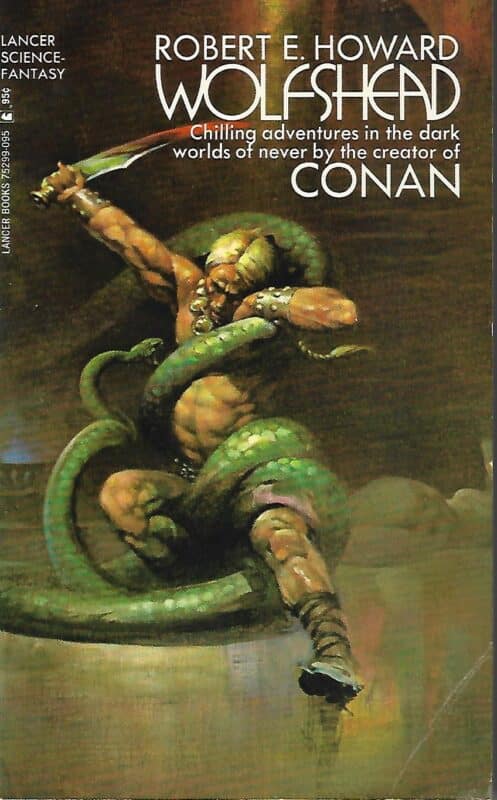
- WOLFSHEAD, Lancer, 1968 (60 cents)
- DE ZWARTE STEEN (THE BLACK STONE), Zwarte Beertjes, 1969 (Dutch)
- LOS MITOS DE CTHULHU, Alianza Editorial, 1969 (Spanish)
- TALES OF THE CTHULHU MYTHOS, Arkham House, 1969
- TALES OF THE CTHULHU MYTHOS, Vol. 1, Beagle, May 1971
- SFマガジン1972年9月臨時増刊号( SF MAGAJIN 1972 NEN 9 TSUKI RINJI ZŌKAN-GŌ) (SF MAGAZINE SEPTEMBER 1972 EXTRA EDITION), Hayakawa Publishing Corporation , September 1972 (Japanese)
- ANTOLOGÍA DE RELATOS DE ESPANTO Y TERROR 6, Dronte, 1972 (Spanish)
- WOLFSHEAD, Lancer, 1972 (n.d., 95 cents)
- TALES OF THE CTHULHU MYTHOS, Vol. 1, Ballantine, 1973
- SKULL-FACE OMNIBUS, Neville Spearman, 1974
- LÉGENDES DU MYTHE DE CTHULHU, Christian Bourgois, 1st Quarter 1975 (French)
- I MITI DI CTHULHU, Fanucci Editore, October 1975 (Italian)
- LÉGENDES DU MYTHE DE CTHULHU 1, France Loisirs, 4th Quarter 1975 (French)
- SKULL-FACE OMNIBUS, Neville Spearman, 1975
- TALES OF THE CTHULHU MYTHOS, Vol. 1, Panther, 1975
- CHRISTOPHER LEE’S “X” CERTIFICATE NO. 1, Star Books, 1975
- CHRISTOPHER LEE’S “X” CERTIFICATE NO. 1, W. H. Allen, 1976
- SAVAGE SWORD OF CONAN #74, Marvel, date unknown
- SKULL-FACE OMNIBUS, Volume 1, Panther, 1976
- FROM THE ARCHIVES OF EVIL, Warner Books, January 1976
- スカル・フェイス (SUKARU FEISU) (SKULL-FACE), Kokusho Kankohkai, May 1977 (Japanese)
- DAS HAUS DES GRAUENS, Erich Pabel Verlag KG, September 1977 (German)
- SKULL-FACE, Editrice Nord, October 1978 (Italian)
- WOLFSHEAD, Bantam, 1979
- LÉGENDES DU MYTHE DE CTHULHU, J’ai Lu, February 1981 (French)
- THE SAVAGE SWORD OF CONAN VOLUME 1 NUMBER 74, Marvel Comics, March 1982
- クトゥルーIV -邪神の復活 (KUTŪRŪ IV – JASHIN NO FUKKATSU) (CTHULHU IV – REVIVAL OF THE FALSE GOD), Seishinsha, May 1983 (Japanese)
- LÉGENDES DU MYTHE DE CTHULHU, Presses Pocket, January 1985 (French)
- LE TERTRE MAUDIT, NeO, November 1985 (French)
- ROSTRO DE CALAVERA, ST (Spanish), 1987
- TALES OF THE CTHULHU MYTHOS, Grafton Books, September 1988
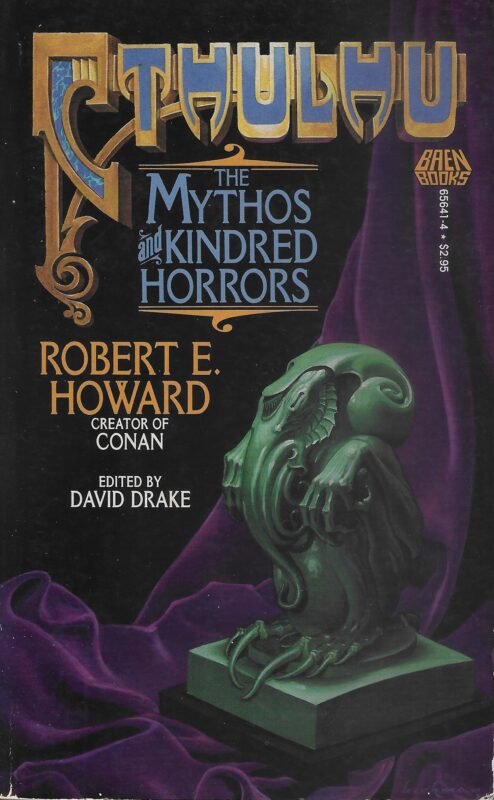
- CTHULHU THE MYTHOS AND KINDRED HORRORS, Baen, May 1987
- CONAN SAGA VOLUME 1 NUMBER 7, Marvel Comics, November 1987 (graphic story featuring Conan)
- クトゥルー4 (KUTŪRŪ 4) (THE CTHULHU MYTHOS 4), Seishinsha Bunko, March 1989 (Japanese)
- L’APPEL DE CTHULHU, Presses Pocket, October 1989 (French)
- CTHULHU THE MYTHOS AND KINDRED HORRORS, Baen, 1989
- L’APPEL DE CTHULHU, Presses Pocket, July 1990 (French, 2nd printing)
- TALES OF THE CTHULHU MYTHOS, Arkham House, 1990
- LE TERTRE MAUDIT, Fleuve Noir, October 1991 (French)
- 黒の碑(いしぶみ) (KURO NO ISHIBUMI), Sōgen Suiri Bunko, December 1991 (1st edition)(Japanese)
- CTHULHU THE MYTHOS AND KINDRED HORRORS, Baen, 1992
- SKULL FACE, Editrice Nord, March 1993 (Italian)
- CULTI INNOMINABILI, Nexus Editore, March 1993 (Italian)
- TO SLEEP, PERCHANCE TO DREAM . . . NIGHTMARE, Barnes & Noble, HB, 1993
- TO SLEEP, PERCHANCE TO DREAM . . . NIGHTMARE, Barnes & Noble, TPB, 1993
- CIEN BESTII, Wydawnictwo PiK, 1994 (Polish)
- TALES OF THE CTHULHU MYTHOS, Harper Collins, 1994
- ZMIERZCH NAD STONEHENGE, Wydawnictwo GEA, 1994 (Polish)
- TUTTI I CICLI FANTASTICI: I CICLI DI KULL DI VALUSIA, DI JAMES ALLISON, DI CTHULHU E DI ALMURIC, Newton Compton Editori, April 1995 (Italian)
- L’APPEL DE CTHULHU, Presses Pocket, June 1995 (French, 3rd printing)
- LOS MITOS DE CTHULHU, Alianza Editorial, 1995 (Spanish)
- MUSTA KIVI, WSOY, 1995 (Finnish)
- TO SLEEP, PERCHANCE TO DREAM . . . NIGHTMARE, Barnes & Noble, 1995
- CTHULHUS ARV, Sam J. Lundwall Fakta & Fantasi, 1996 (Swedish)
- MAGAZÍN POUTNÍK 11, Klub Julese Vernea, 1996 (Czech)
- THE BLACK STONE, North-West, 1997 (Russian)
- NE ASSATOK NEKEM SIRT, Cherubion Könyvkiadó, 1998 (Hungarian)
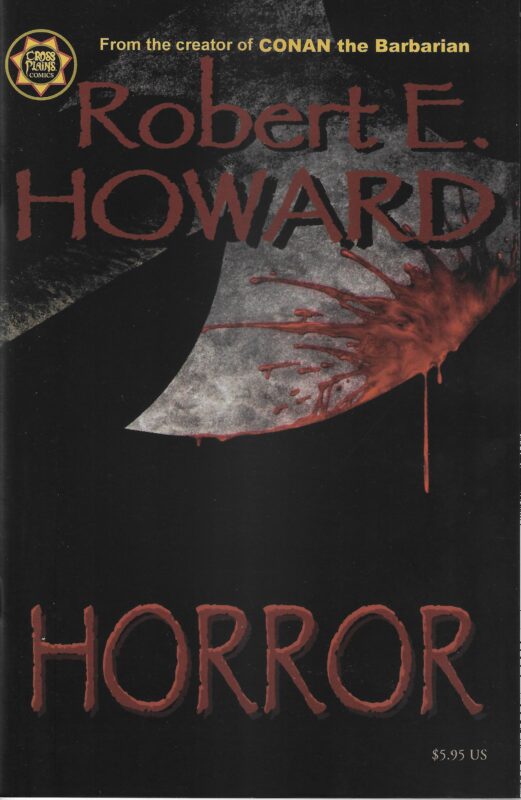
- ROBERT E. HOWARD’S HORROR, Cross Plains Comics, August 2000 (graphic adaptation)
- 黒の碑(いしぶみ) (KURO NO ISHIBUMI), Sōgen Suiri Bunko, August 2000 (2nd printing)(Japanese)
- L’APPEL DE CTHULHU, Presses Pocket, September 2000 (French, 4th printing)
- TALES OF THE CTHULHU MYTHOS, 2nd printing, Arkham House, 2000
- L’ORRORE DI CTHULHU, Newton Compton Editori, January 2001 (Italian)
- CTHULHU MITOSU ÖYKÜLERI, İthaki Yayınları, April 2001 (Turkish)
- NAMELESS CULTS, Chaosium, December 2001
- LOS MITOS DE CTHULHU, Alianza Editorial, 2001 (Spanish)
- DER CTHULHU MYTHOS, LPL Records, 2002 (German, audio)
- DER CTHULHU-MYTHOS 1917-1975, Festa Verlag, February 2003 (German)
- PEOPLE OF THE DARK, Wildside Press, July 2005
- THE WEIRD WRITINGS OF ROBERT E. HOWARD Volume 1, Girasol Collectables, January 2006
- THE WEIRD WRITINGS OF ROBERT E. HOWARD Volume 2, Girasol Collectables, March 2006
- PEOPLE OF THE DARK, Wildside Press, June 2006
- CRIMSON SHADOWS: THE BEST OF ROBERT E. HOWARD VOLUME 1, Del Rey, August 2007
- THE HAUNTER OF THE RING & OTHER TALES, Wordsworth Editions, September 2007
- LÉGENDES DU MYTHE DE CTHULHU 1, Presses Pocket, November 2007 (French)
- THE BLACK STONE, AND THE THING ON THE ROOF, Dodo Press, February 2008
- RELATOS DE TERROR SOBRENATURAL, Urco Editora, April 2008 (Galician)
- THE HAUNTER OF THE RING & OTHER TALES, Wordsworth Editions, 2008
- THE HORROR STORIES OF ROBERT E. HOWARD, Del Rey, October 2008
- AMERICAN FANTASTIC TALES: TERROR AND THE UNCANNY FROM POE TO THE PULPS, Library of America, August 2009
- CRIMSON SHADOWS: THE BEST OF ROBERT E. HOWARD VOLUME 1, Subterranean Press, November 2009
- THE HORROR STORIES OF ROBERT E. HOWARD, Tantor Media, Inc., March 2010 (audio)
- THE HORROR STORIES OF ROBERT E. HOWARD, Subterranean Press, March 2011
- MYTHOS: THE MYTHS AND TALES OF H. P. LOVECRAFT AND ROBERT E. HOWARD, Numen Books, October 2011
- THE BLACK STONE, FNH Audio, December 2011 (audio)
- LOS MITOS DE CTHULHU, Alianza Editorial, 2011 (Spanish)
- SKULLCRUSHER: SELECTED WEIRD FICTION VOLUME 1, Creation Oneiros, September 2012
- KRÓLESTWO CIENI I INNE OPOWIADANIA Z MITOLOGII CTHULHU, Agharta, January 2013 (Polish)
- LES OMBRES DE CANAAN, Bragelonne, February 2013 (French)
- CULTOS INOMINÁVEIS, Saída de Emergência, February 2014 (Portuguese)
- LES OMBRES DE CANAAN. LA PIERRE NOIRE, Bragelonne, February 2014 (French)
- CULTOS INOMINÁVEIS, Saída de Emergência, March 2014 (Portuguese)
- IL CICLO DI CTHULHU VOLUME 1, Dunwich Edizioni, July 2014 (Italian)
- RELATOS DE TERROR SOBRENATURAL, Urco Editora, 2014 (Galician, 2nd edition)
- THINGS THAT GO BUMP IN THE NIGHT: A TREASURY OF CLASSIC WEIRD, Parallel Universe Publications, January 2015
- THINGS THAT GO BUMP IN THE NIGHT: A TREASURY OF CLASSIC WEIRD, Parallel Universe Publications, February 2015
- I FIGLI DELLA NOTTE. RACCONTI DELL’ORRORE VOLUME 1, Arnoldo Mondadori Editore, March 2015 (Italian)
- THE SHADOW KINGDOM AND OTHER WEIRD TALES, Ulwencreutz Media, October 2015
- DIE KINDER DER NACHT, Festa Verlag, November 2015 (German)
- TALES OF CTHULHU, Perennial Press, November 2015
- O MUNDO SOMBRIO: HISTÓRIAS DOS MITOS DE CTHULHU, Editora Clock Tower, March 2016 (Portuguese)
- ČERNÝ KÁMEN, Laser Books, July 2016 (Czech)
- БЕЗЫМЯННЫЕ КУЛЬТЫ: МИФЫ КТУЛХУ И ДРУГИЕ ИСТОРИИ УЖАСА (NAMELESS CULTS: CTHULHU MYTHOS AND OTHER HORROR STORIES), AST, August 2016 (Russian)
- TALES OF CTHULHU, Jovian Press, December 2016
- LOVECRAFT SHORT STORIES, Flame Tree Publishing, February 2017
- A ROBERT E. HOWARD SAMPLER, Robert Derie & Chris Gruber, June 2018
- I MITI DI CTHULHU, Arnoldo Mondadori Editore, April 2019 (Italian)
- DECA NOĆI I DRUGE PRIČE, Filip Višnjić, December 2019 (Serbian)
- THE ADVENTURES OF SWORD AND SORCERY #1, Fortuna Publications, March 2020
- LE ROYAUME DES CHIMÈRES, Le Livre de Poche, April 2020 (French)
- THE CTHULHU STORIES OF ROBERT E. HOWARD, WordFire Press, September 2020